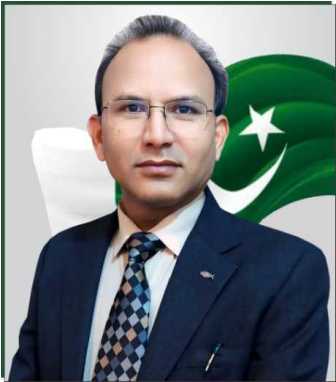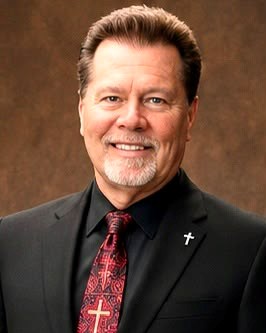
Written by: Dr. Everest John
A church may be full and yet spiritually hungry. A congregation may be large and yet poorly taught. Music may be excellent, technology sophisticated, attendance impressive, and religious activity constant, while the pulpit itself has slowly become empty—not necessarily empty of a preacher, but empty of substantial biblical teaching, theological depth, spiritual formation, and the transforming voice of Scripture.
The phrase “Empty Pulpits, Full Temples” therefore describes a paradox of contemporary Christianity. The problem is not that people come to church. A full church ought to be a reason for gratitude. The problem begins when numerical success is mistaken for spiritual maturity, when attendance is treated as discipleship, and when religious enthusiasm substitutes for Christian formation.
We observe that increasing numbers of churches, denominations, public visibility, and media presence do not automatically produce corresponding growth in Christian quality. It speaks strikingly of temples being full while pulpits remain empty and argues that what the church needs is a return to Scripture accompanied by serious theological formation.
The phrase should therefore not be understood literally. The pulpit may be occupied every Sunday. Someone may preach for forty minutes. Yet the pulpit can still be “empty” if the Word of God is displaced by something else.
It can be empty when preaching becomes motivational entertainment.
It can be empty when personal stories replace biblical exposition.
It can be empty when the preacher tells people only what they want to hear rather than helping them understand what Scripture actually says.
It can be empty when theological reflection disappears because it is considered too difficult for ordinary believers.
It can be empty when sermons promise success, prosperity, emotional comfort, or instant solutions but do not form Christian character.
And perhaps most dangerously, the pulpit can be empty when the Bible is constantly quoted but rarely interpreted responsibly.
The central issue is therefore not whether Scripture appears in the sermon but whether Scripture governs the sermon.
Christian Education insists that the genuine task of theological teaching is the teaching of the Word and that no curricular material should displace the voice of God expressed in Scripture. The book criticizes preaching that substitutes serious biblical instruction with self-help language, humanistic argumentation, or imaginative stories imposed upon the biblical text.
This is not an argument against illustrations, creativity, contemporary application, psychology, philosophy, science, history, or culture. All of these can assist Christian communication. The danger arises when the servant becomes the master—when contemporary material determines the message and Scripture is used merely to decorate conclusions already reached.
The church was never commissioned merely to gather crowds. Christ commanded His followers to make disciples.
That distinction is fundamental.
A crowd can be assembled in a few hours.
A disciple is formed over years.
A crowd can be excited.
A disciple must be instructed.
A crowd can admire a preacher.
A disciple must learn to follow Christ.
A crowd can increase statistics.
A disciple must develop character.
The Great Commission therefore contains an educational command. Matthew 28:19– 20 does not end with conversion or baptism. It includes teaching people to observe everything Christ commanded. Christian Education consequently describes the church’s mission as preaching, baptizing, and discipling or educating.
This means that Christian education is not a secondary department of the church. It belongs to the church’s identity. Sunday school is Christian education, but Christian education is larger than Sunday school. Bible study is Christian education, but Christian education is larger than Bible study. Seminary is theological education, but Christian education is larger than seminary.
Every sermon teaches. Every worship service teaches. Every church practice teaches. Every leadership decision teaches. Even what a church repeatedly celebrates teaches its people what Christianity really values.
The question is therefore not whether a church educates its people. It inevitably does.
The real question is:
What kind of Christians is our church producing?
This leads to perhaps the most valuable framework in Christian Education: the three objectives of Christian teaching—
Inform. Form. Transform.
The first task is to inform. Believers must know Scripture, Christian doctrine, history, ethics, and the foundational truths of faith. Christianity without knowledge easily becomes sentimentality. The New Testament does not celebrate ignorance as spirituality.
Yet information is only the beginning.
The second task is to form. Biblical knowledge must become character. Truth must move from the page into personality. The learner must not simply know what forgiveness means but become forgiving; not merely define humility but become humble; not only explain love but learn to love.
The book emphasizes that formation is more difficult than information. It presents the progression as receiving Christian teaching, processing it, assimilating it, and finally allowing Christ’s character to be formed within the believer. And then comes the third purpose: transform. Christian education reaches its goal when knowledge and formation produce visible change. Drawing on Romans 12:2, the book describes transformation as renewal of the mind that becomes evident in attitudes, actions, testimony, and a believer’s ability to become an agent of change rather than merely conforming to prevailing errors. So, we may express the whole educational mission of the church in a simple sequence:
The pulpit informs the mind.
Discipleship forms the character.
The Holy Spirit transforms the life.
When any part of this process is missing, Christian education becomes incomplete.
This explains why a church may be crowded yet immature. People can receive religious information for years without formation. They can memorize verses without developing theological discernment. They can become emotionally involved in worship without becoming ethically transformed.
The New Testament’s measure of maturity is not how loudly Christian’s worship but how deeply Christ is formed within them.
This is why Ephesians 4 is so important to Christian education. Apostles, prophets, evangelists, pastors, and teachers are given not to perform ministry while everybody else watches, but “to equip the saints for the work of ministry.”
The book consequently describes the church as both a capacitated and capacitating community: a community that is equipped and that equips others. The educated church should therefore produce three things. First, Christ likeness.
Christian education should move believers toward “the measure of the stature of the fullness of Christ.”
Second, discernment.
The believer should no longer be carried around by every new doctrine, fashionable preacher, internet prophecy, theological novelty, or religious manipulation. Third, Service.
Knowledge must equip believers for ministry. Christian education exists for service, and knowledge without corresponding action is not mature Christianity.
This raises a serious question for the contemporary church:
Are we producing disciples—or religious consumers?
A consumer asks, “What can this church give me?”
A disciple asks, “How can Christ form me and use me?”
A consumer evaluates worship according to preference.
A disciple evaluates life according to Scripture.
A consumer follows personality.
A disciple follows Christ.
A consumer changes churches when dissatisfied.
A disciple accepts the discipline of growth.
This is why an empty pulpit is far more dangerous than an empty building. An empty building is visible. Everyone knows something is wrong. An empty pulpit can remain hidden behind crowds.
The auditorium may be overflowing while theological understanding is declining. The church may possess cameras, screens, professional musicians, branding, conferences, and thousands of social-media followers, yet its members may still be unable to explain the gospel, distinguish sound doctrine from error, understand Scripture responsibly, or articulate why they believe what they believe.
That is the tragedy of full temples and empty pulpits. The solution, however, is not to romanticize an earlier age or reject every contemporary method. The answer is to restore the church’s teaching vocation. Christian education must once again become central to pastoral ministry.
The book provides an excellent model for theological preparation. Ministers should be formed intellectually, spiritually, socially, emotionally, and practically. They should be committed to Scripture, possess Christian character, gain real ministry experience, and understand themselves as servants of the church rather than religious professionals seeking position. 39 Christian Education
One of the book’s most memorable descriptions of the prepared minister deserves particular attention. Christian leadership should combine:
The theologian’s mind,
the mystic heart,
the trailblazer’s courage,
and the saint’s humility.
What an important corrective this is.
A theologian’s mind without a mystic heart can produce cold intellectualism.
A mystic heart without a theologian’s mind can produce sincere confusion.
Courage without humility can produce authoritarian leadership. Humility without courage can produce passive ministry.
The mature minister requires all four.
And perhaps this is precisely what a full temple needs most: not simply another charismatic personality, but a teacher of Scripture whose mind has been disciplined, whose heart has been shaped by communion with God, whose courage enables faithful proclamation, and whose humility refuses to make the pulpit a platform for personal greatness.
Christian education also reminds us that the pulpit is not responsible for everything. The church must create a complete culture of learning.
Parents must teach children.
Older believers must mentor younger believers.
Pastors must train leaders.
Teachers must equip disciples.
Seminaries must serve churches.
Churches must encourage reading.
Believers must learn to ask questions without fear.
Bible study must move beyond isolated verses toward understanding Scripture as a whole.
The goal is not to turn every Christian into an academic theologian. The goal is something much greater: To make every Christian a thoughtful disciple.
The biblical pattern has always been intergenerational. The book points to Deuteronomy’s educational emphasis, where God’s instruction is repeatedly taught within the family and covenant community so that faith is transmitted and identity preserved against surrounding idolatry.
The church that neglects education eventually loses its theological memory.
And when theological memory disappears, every generation begins Christianity again according to its own preferences.
At that point popularity can replace truth, personality can replace doctrine, excitement can replace worship, and slogans can replace theology.
The tragedy is not that Christians stop speaking about God.
The tragedy is that they may speak constantly about God while increasingly knowing less about Him.
Therefore, “Empty Pulpits, Full Temples” should not be treated merely as criticism. It should be heard as a call to renewal. Let our temples be full—but let our pulpits also be full:
Full of Scripture,
full of responsible interpretation,
full of Christ,
full of theological depth,
full of grace and truth,
full of courage,
full of humility,
And full of teaching capable of producing mature disciples.
Because the real success of the church cannot finally be measured by how many people enter the building. It must also be measured by what kind of people leave it.
Do they leave merely inspired—or instructed?
Merely excited—or equipped? Merely entertained—or transformed? Merely impressed with a preacher—or more deeply committed to Christ?
A full temple may demonstrate that people have gathered. A full pulpit helps determine who they are becoming after they gather.
And this is why Christian education remains one of the church’s essential ministries: not merely to fill minds with religious information, but to form character, transform lives, equip believers for ministry, and prepare each generation to know God, love Him, understand His Word, and faithfully serve His purposes in the world.
We can reverse “Empty Pulpits, Full Temples” by restoring Scripture-centered preaching, serious Christian education, and intentional discipleship that moves believers from information to formation and finally to transformation.
*******